Measuring Mindstates
Study 1: Can We Measure the Mindstates of High-Achievers?
It all started in 2015 with a question. Can we measure the mindstates of high-achievers?
You can't improve what you can't measure. So, if we can measure our minds, maybe we can eventually find a way to optimize our performance too.
We knew that any framework that would be useful would have to be fast and easy, because high-achievers can't sit around in university psychology labs all day.
We began by interviewing 100 high-achieving executives and entrepreneurs and asked what they felt were the greatest psychological and emotional obstacles they encounter while experiencing high-pressure in their lives.
We organized the obstacles they shared and narrowed the list down to the most common themes, including:
fear and anxiety, despair, manic thinking patterns, trouble focusing, negativity, loss of identity outside of their work, and mental exhaustion
These executives were qualified for their jobs based on their level of skills and experience, yet they had observed their own job performance varying widely based on their ability to manage these psychological and emotional obstacles.
The high-achievers felt that these components of their mindstates, when compromised, primarily made it difficult for them to utilize their skills and experiences to achieve their professional goals by:
Effectively communicating with and inspiring people around them
Brainstorming creative solutions to tricky problems
Consistently showing up in a helpful way when hard work needed to be done
Listening deeply enough to respond with critical thinking and intuition
Accurately evaluating opportunities that come with risk and uncertainty
These insights guided the creation of our one-minute, seven-factor model for measuring high-achievers, easy and fast enough for everyday use.
In 2020 the model was reviewed by Dr. Michael A. Freeman, M.D. of the University of California, San Francisco, one of the world's top psychiatrists and psychologists to Silicon Valley executives and founders, and Dr. Terri Finney Psy.D. Clinical Psychology an economic development executive supporting entrepreneurs in rural communities throughout the American West.
We then formed partnerships with Techstars, Entrepreneurs' Organization (EO), Young Presidents Organization (YPO), Google for Startups, The World Economic Forum, and Energize Colorado to measure the mindstates of executives and entrepreneurs within their organizations around the world.
We continue to support these audiences, as well as our own community of members at Dory, with keynotes and workshops online and from Turin, Italy to Barcelona, Spain and every major city in the United States as well.
Moderating Mindstates
Study 2: How Do High-Achievers Moderate their Mindstates?
Following the development of our measurement model and years of measuring the minds of high-achievers, in 2021 we asked ourselves another question.
Knowing that high-achievers believe that certain mindstates act as obstacles to their success, are they able able to moderate their mindstates, and if so, how?
In order to do this they would need to be aware of the state of their minds and have an ability to determine if they had changed their mindstate after taking action.
Following the psychological principle of emotion following action, we set out to determine what actions high-achievers take when they want to modify their mindstates.
For six months we interviewed two dozen high-achievers including a Navy SEAL, a Los Angeles Times bestselling author, an F-18 combat pilot, a Super Bowl winning NFL running back, leading entrepreneurs, and World Record holding ultra endurance athletes and explorers with the goal of understanding how they moderate their mindstates as they push their limits and achieve incredible goals.
Specifically, we needed to understand how they moderate each of the seven factors in our measurement model.
They shared 715 different techniques.
We then launched an app on the Apple and Google app stores and enrolled over 3,000 more high-achievers who held executive roles in companies (for many of them their own companies) who shared an additional 1,522 techniques for moderating their mindstates.
We then put those techniques into action in the app, allowing study participants to select techniques and indicate which factors of their mindstate changed after they completed them. In total, study participants completed 42,640 techniques, reporting over 30 million shifts in mindstate.
The average pressure rating of all participants across the entire study period was 7.2 out of 10 points, representing their high-pressure professional lifestyles.
Over five years we mapped over 2,000 techniques to each of the seven factors of our measurement model and observed which techniques were most effective for high-achievers while they're experiencing high levels of pressure in their lives.
The most consistently effective techniques fell into the following three categories:
Movement, mindset, and connection
Entrepreneurs' Organization published the findings of the study in their April 2025 article Stress Awareness for Entrepreneurs.

Optimizing Mindstates
Study 3: Can We Individualize Mindstate Moderation?
The mapping of 3,000 high-achievers, 2,400 techniques for moderating mindsets, and millions of interactions between techniques and mindstates within our study is a unique asset in the world of high performance research.
It got us thinking.
Since we now know which techniques are most effective at moderating mindstates across our general population of high-pressure high-achievers, would it be possible to design unique mindset optimization prescriptions for each individual participant?
And if so, would that allow anyone who participates in the study to optimize their mindstate more efficiency than just following general recommendations?
Theoretically it seemed possible, but we wondered if we'd collected enough data to be able to algorithmically design unique prescriptions for every single participant.
We designed an algorithm that calculated compatibility ratings between each of the 7 factors of our mindstate model, each of our 3,000 study participants, and each of the 2,400 techniques we had mapped.
The resulting graph contained 50 million datapoints that together represented the fabric of personalized mindstate optimization in our study.
When individual compatibilities were not available, the algorithm fell back to ratings from the general population. Over time, as each study participant interacted with each technique the graph filled in their personalized ratings.
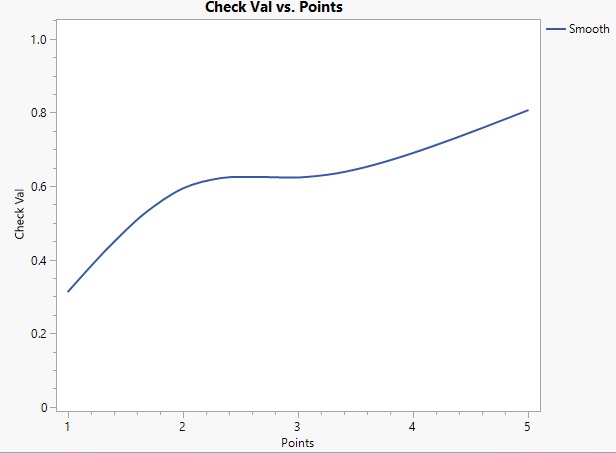
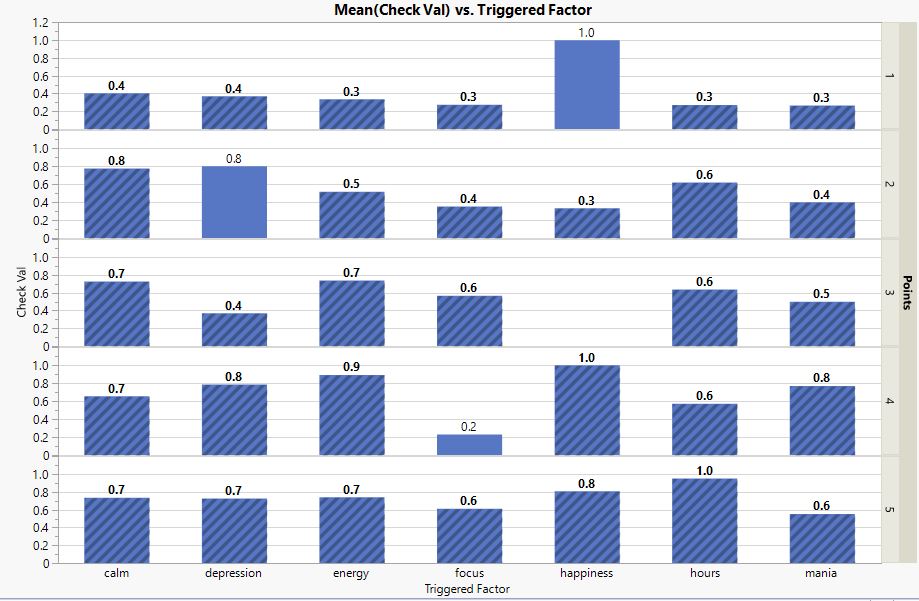
Compatibilities were rated from one to five, with five being an expected 80% or higher chance of a match, and one representing a 20% or lower chance of a match.
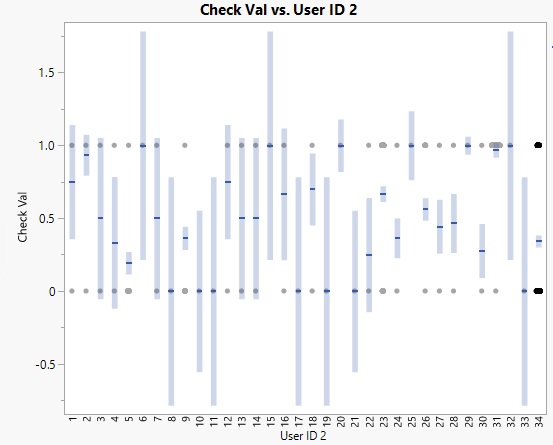
In December of 2023 we took a snapshot of all 1,452 techniques completed by study participants in the previous month and analyzed it to see if higher compatibility ratings were more likely to produce matches between predicted mindstate factors and the improved mindstate factors reported by a participant.
Said another way, if the algorithm recommended that a participant use technique A to support mindstate factor X, and they did technique A, did they report an improvement to mindstate factor X or not? If yes, we called that a match.
Clinical trial analysis of the November 2023 study participant data showed that for every 1 point increase in Compatability Rating the odds of success (Odds Ratio or OR) increased by 1.6 with a 95% Confidence Interval of 1.46 - 1.76.
Over the entire range of Compatability Ratings from 0 to 5, the odds of success (Odds Ratio or OR) increased 6.7 fold with a 95% Confidence Interval of 4.6 - 9.8.
We observed that the algorithm was able to predict specific mindstate moderations for individual study participants at an accuracy that is 6.7 times more precise than random selections.
Measuring Performance
Study 4: Does An Optimized Mindstate Perform Better?
Knowing that high-achieving executives and entrepreneurs felt that certain psychological and emotional obstacles that comprise their mindstates were inhibiting their performance, we wanted to understand if the impact they were observing could be measured in real business results.
After all, feelings only go so far in the world of capitalism.
In March of 2022 we set out to determine if shifting the mindstates of professional workers toward a theoretical optimal range would increase their performance.
No other type of professional worker is more closely measured and scrutinized than an entry level sales representative at a software company
Entry level software sales is a high-pressure job where success and failure are determined by cold hard metrics, not emotions. We wondered if we could show that by optimizing the seven psychological and emotional components of mindstate that we measure, the reps might produce better cold hard numbers in result.
Starting with a proposed optimal mindstate range based on research and insights from an April 2016 Harvard Business Review article by Francesca Gino, Are You Too Stressed to Be Productive? Or Not Stressed Enough?, which we referred to as the Optimal Performance Zone.
We enrolled twenty-two sales representatives and carefully divided them into a eleven-rep control group and an eleven-rep study group.
Both groups were comprised solely of newly hired sales development reps at an enterprise software company in Raleigh, North Carolina. Special attention was made to evenly balance the teams and product lines represented in each group.
All twenty-two reps in the study were determined to have the required experience for the job as part of previous hiring screening, and they all received identical job skills training over the first ninety-days.
Over the ninety-days the control group received only the job skills training, but the study group received the job skills training plus daily check-ins to measure their mindstates and individualized recommendations of techniques to move their mindstates toward the proposed optimal range.
At the end of the ninety-day study period, the study group of eleven sales representatives had six quota achievers, and the control group of eleven sales representatives had only two quota achievers.
The study group had delivered 3x the performance of the control group.
We then looked at stratification within the study group to see if representatives who measured their mindstates more often and completed more of the recommended mindstate moderation techniques outperformed their peers who did fewer of these activities in the same group.
The data showed that reps who more actively measured and supported their mindstates sold 2.3x more than the reps who did fewer of these activities.
Results of the study were co-published in a case study with Revgen, Founders First, and Venture Xpert Advisors in June of 2022.

Measuring Performance
Study 5: Does A Reduced Mindstate Perform Worse?
On the heels of our discovery that optimized mindstates allow high-achievers to drastically increase their performance, and knowing that we had a mapping of 2,400 techniques that increased each of the seven factors in our mindstate measurement model, we got curious once again.
Participants in the sales representative study were filtered by hiring protocols that would have trended the group toward average to high mindstate strength. It was highly unlikely that a person that was fully burned out and unable to perform at all would have made it through their hiring process.
And our first measurements with those study participants confirmed that they all had near average to slightly above average strength, despite being not strong enough to be within the theoretical optimal zone, in our mental resilience model.
What we had measured only represented the performance increase that comes from supporting high-achievers who are already doing pretty well, by showing them how to become highly optimized.
We know from measuring the minds of thousands of executives and entrepreneurs that the average level of strength our model measures for them is 72 out of 100 points. For high-pressure high-achievers the optimal performance zone doesn't start until 80 out of 100 points.
The perfomance increase we had observed was just part of the total spectrum of impact that the strength of their mindstates was having on their performance. Because high-achievers don't always operate with mindstates from average to high strength. Sometimes their mindstate strength is very low.
We wanted to understand how far performance falls when high-achievers have mindstates with below average to low levels of strength.
In partnership with Mark Williams, retired Air Force F-18 combat pilot, Bill Kipp, retired Marine Special Operations Reconnaissance Team Lead, and the Cognitive Performance Institute at Black Lab Sports we designed an experiment and enrolled eight executives and entrepreneurs to participate in the study, which would put participants through unique situations to quickly reduce their mindstate strength, as measured by the seven factors in our mindstate model.
Specifically activating fear and anxiety, despair, distracted thinking, negativity, loss of identity, and mental exhaustion for the purpose of measuring their performance during a moment of mindstate weakness.
All participants had their brain states recorded using Muse electroencephalogram (EEG) devices for additional context alongside our mindstate model.
Each participant was isolated in a remote location in the wilderness where they were asked to perform a short list of simple cognitive tasks as quickly as possible.
Things like reciting the last four digits of their phone numbers or sharing their vehicle's license plate numbers. Their accuracy and speed was recorded. With average mindstate strengths, they were able to respond quickly and accurately.
Then each participant experienced a simulated verbal confrontation that instantly reduced their mindstate strength and put them into in a state of fight or flight.
When the simulation ended after only twenty seconds, each participant was presented with a similar list of simple cognitive tasks as they had been asked before.
With their highly reduced mindstate strength, many participants weren't immediately able to understand the questions, and asked to hear them again. Others fumbled to recall the information or made mistakes in their answers.
Overall, across the eight-person study group, the speed and accuracy of their responses fell by 70% as compared to their scores from before the simulation.
Later, one of the participants recounted to the research team a previous experience where in a personal emergency they had accidentally entered the numbers 911 into their calculator, instead of the phone app while trying to call for help.
We had observed, measured, and quantified the negative impact that mindstate strength has on performance when it falls.

Predicting Performance
Study 6: Can We Predict Performance in High-Achievers?
Our model for measuring mindstate strength had now been used in a study showing that stronger mindstates increase performance by 3x, and another study showing that weaker mindstates decrease performance by 70%.
Together these studies prove that a mindstate optimized with our measurement model allows high-achievers to perform up to 10x better than they will otherwise perform with an unoptimized mindstate.
This was an incredible breakthrough.
We not only knew that optimized mindstates in our model outperformed unoptimized mindstates by 10x, we also knew how to deliver high-pressure high-achievers into the Optimal Performance Zone with precision.
And because burnout is a state of consistently low mindstate strength, the same methods that would optimize performance by increasing mindstate strength would prevent burnout by definition.
Together, we now knew exactly how to turn anyone into a high-performer who would never burn out.
Within the mindstate model, we had begun measuring Mental Resilience as the relationship between pressure scores and mindstate strength, and Refresh Rates as the speed in which mindstate strength recovers after it falls.
These components seemed critical to keeping high-achievers in the zone because they enabled them to never fall out of the zone in the first place, or return back to the zone more quickly any time they fell.
We also began to collect work effort measurements in addition to pressure scores so we could attempt to understand how much the volume of the pressure, versus the intensity of the pressure, was impacting mindstate strength.
We designed a new algorithm to estimate levels of pressure volume and intensity that were most likely to deliver study participants to a level of mindstate strength tomorrow that would place them in the middle of the optimal performance zone.
Because pressure intensity relies so greatly on external circumstances that are difficult to regulate from day to day, we primarily predicted pressure volume as represented by the total number of hours each participant works each day.
The algorithm's predicted number of work hours for a day was referred to as the Optimal Pace for the day. The algorithm looks at Pressure Volume, Pressure Intensity, Mental Resilience, Refresh Rate, and Optimal Pace for every previous day and makes its predictions from everything it has learned in the past.
Study participants were shown their Optimal Pace every time they measured their mindstate and were offered the opportunity to adjust their work hour plans for the day to match the target.
We analyzed the relationships between each of these predictors and days spent in the Optimal Performance Zone, and observed that the closeness of their Reported Pace to their Optimal Pace had the highest correlation value, scoring 30 out of 100, in comparison to values ranging from 5 to 10 for the other measurements.
There are many things that high-achievers cannot control in their wildly dynamic lives, but those things seem to have less influence on their performance than the one thing they have some ability to adjust, the number of hours they will work.
We began referring to the predictive power of Optimal Pace to unlock higher levels of future performance as Optimal Pace Theory.
Inc. Magazine published our findings in their September, 2024 article How to Avoid Burnout by Finding Your Optimal Pace as an Entrepreneur.
"You can’t sprint a marathon. Discover your ideal speed to increase your chances of winning."

Influencing Performance
Study 7: Can We Influence Performance in High-Achievers?
Alignment to Optimal Pace continues to be a top predictor of future performance in the high-pressure high-achievers we study, but we're discovering new ways to optimize for additional performance in individuals.
In September of 2025 we analyzed 37 metrics of mindstate and performance across our platform to determine which ones were most predictive of future growth in Mental Resilience scores among 500 of our most active participants.
We chose to study Mental Resilience because it has such a powerful protective power on performance, by resisting the negative impacts of pressure that weaken mindstate strength when left unchecked over time.
We observed widely varying correlation scores between participants.
Some participants have the highest correlations from one or two individual factors of their mindstates, commonly calm or satisfaction, indicating that these factors may be influencing how they rate their other factors.
Others have the highest correlations from specific ranges of pressure, indicating that they struggle when pressure exceeds very specific thresholds, but thrive when pressure is lower. The observed thresholds were often between six and eight, on a scale from zero to ten, where ten is the highest.
Many still have the highest correlations from their level of alignment with their Optimal Pace, indicating that they quickly get themselves in trouble when they push themselves too hard and thrive when they push just right.
And others were observed to have the highest correlations with non-standard ranges of mindstate strength, most commonly lower ranges of mindstate strength, right below the theoretical optimal zone.
These findings guided our development of four primary archetypes that relate to the factors that enable high-performance in high-pressure high-achievers.
The archetypes are: the Believers, the Lifters, the Pacers, and the Burners.
Believers have their performance largely mediated by how they feel about their mindstates. They 10x their performance by building their self-confidence through experiences that remind them that their mindstates are strong.
Lifters know what they can handle and enable their best performance by staying right below their pressure limits. They 10x their performance by delegating just the right amount of responsibility so they stay engaged but do not get overwhelmed.
Pacers win by going just the right speed and no faster, forever. They 10x their performance by being the steady turtle, not the hare.
And finally, Burners have to feel a bit more pain than everyone else to unlock the best version of themselves. They 10x their performance by biting off a bit more than they can chew, and just making it happen anyway.
Understanding Performance
Study 8: Distributions of Optimal Pace in High-Achievers
Optimal Pace is a single score that predicts how much high-quality work a high-achiever can sustainably produce on a given day.
Unlike traditional productivity measures that focus only on skill or hours worked, Optimal Pace reflects the combined influence of three essential factors: skill, experience, and mental resilience.
Skill determines what a person is capable of doing, experience helps them apply those skills effectively in complex situations, and mental resilience enables them to continue performing well despite pressure and uncertainty.
Within the Dory community, Optimal Pace serves as a simple, actionable measure of the relationship between pressure and performance. In practical terms, it represents the number of hours someone can work with full mental effectiveness today without needing additional recovery before tomorrow.
For example, an Optimal Pace of five means a person can work five focused hours sustainably. If circumstances require more work than that, the Dory Protocol provides strategies to recover the additional energy required.
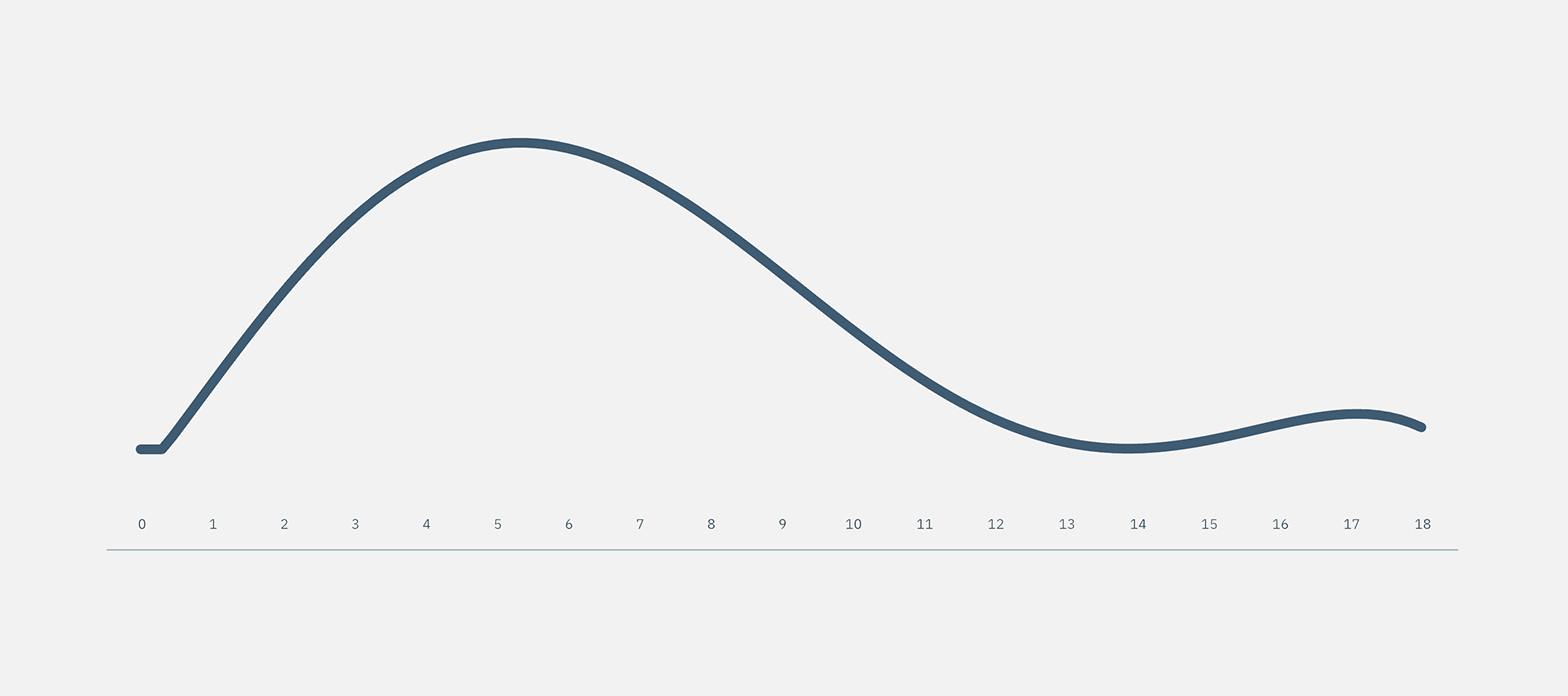
Optimal Pace is measured on a scale from 0 to 18.
An analysis conducted in July 2026 using six years of data from more than 2,000 Dory members found an average Optimal Pace of 6.4, with a median of 5.9. The most common score was 6.
The data showed that 89% of all Optimal Pace scores fell between 2 and 10, while 71% were between 2 and 7.
Scores from 8 to 11 accounted for just 21% of observations, and only 8% of members achieved scores between 12 and 18, highlighting how uncommon sustained elite performance is.